Round Two Wins: The Surprising Reasons Second Marriages After 50 Tend to Be Stronger
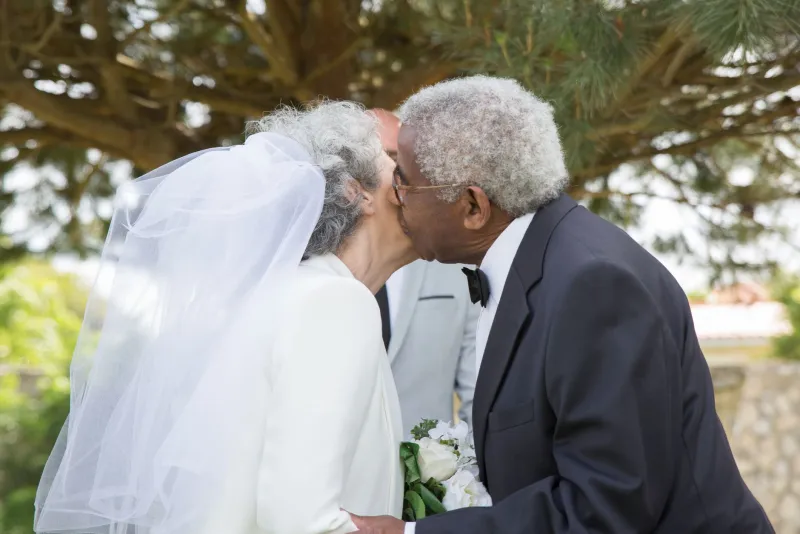
There's a persistent cultural myth that a second marriage is somehow a lesser achievement — a do-over born from failure rather than wisdom. But spend five minutes talking to couples who found each other in their 50s and remarried, and that narrative falls apart pretty fast. For a growing number of mature Americans, the second walk down the aisle isn't a retreat. It's an upgrade.
And the numbers back that up.
What the Research Actually Says
Studies on remarriage satisfaction among adults over 50 consistently show something counterintuitive: people who remarry later in life report higher emotional fulfillment, stronger communication habits, and a clearer sense of what they actually want from a partner. A Pew Research Center analysis found that remarried adults over 50 were significantly more likely to describe their relationship as "very happy" compared to those in long-term first marriages of equivalent duration.
That's not a fluke. It's the compounded result of lived experience doing what it was always supposed to do — teaching you things you couldn't have known at 26.
First marriages often happen when people are still figuring out who they are. Career pressures, family expectations, and the social script of "settling down" push many couples together before either person has developed a clear sense of their own needs, limits, or values. The result? Two incomplete self-portraits trying to form a coherent picture.
By 50, most of that noise has quieted down.
The Clarity That Comes With Time
One of the most underrated advantages mature daters bring to remarriage is brutal self-awareness. After decades of navigating relationships, careers, health challenges, and personal growth, most people over 50 have a pretty honest read on themselves. They know their triggers. They know their non-negotiables. They know what they were willing to overlook at 30 that they absolutely cannot tolerate now.
That kind of clarity changes everything about how you choose a partner.
Rather than selecting someone based on chemistry alone — or worse, because it seemed like the right time — mature adults tend to approach remarriage with something closer to intentionality. They're not in a hurry. They're not trying to check a box. They're genuinely evaluating compatibility on a deeper level: emotional availability, shared values, lifestyle alignment, and yes, physical connection too.
This deliberate approach pays off. Couples who marry later report fewer surprises about each other's core personality, and fewer resentments built from unspoken expectations.
Communication Gets a Serious Glow-Up
Here's something nobody tells you in your 20s: most relationship problems aren't really about the issue on the surface. They're about the inability to talk about the issue clearly and without defensiveness. First marriages are often a crash course in discovering this the hard way.
By the time someone is considering remarriage in their 50s, they've usually done some version of that work — whether through therapy, painful reflection, or simply the trial and error of getting things wrong enough times to finally get them right.
Mature couples tend to communicate more directly. They're less likely to play games, more willing to say what they mean, and more capable of hearing difficult feedback without treating it as a personal attack. That shift in communication style alone accounts for a massive portion of the satisfaction gap between first and second marriages in this age group.
There's also less ego on the line. When you've already been through a divorce or the loss of a long-term partner, you tend to care a lot less about "winning" an argument and a lot more about actually resolving it.
Societal Pressure Drops Off a Cliff
One of the quieter benefits of remarrying at 50-plus? Nobody's breathing down your neck about it.
First marriages, especially those that happen in your 20s and 30s, often carry enormous external weight. Parents have opinions. Friends are getting married at the same time and creating implicit competition. Social media turns every relationship milestone into a performance. All of that pressure can distort decision-making in ways that are hard to recognize in the moment.
By the time you're considering a second marriage in your 50s, most of that external static has faded. Your parents may no longer be weighing in. Your friends have their own complicated lives. The cultural pressure to hit certain milestones by certain ages has largely evaporated. What you're left with is a decision that's genuinely yours.
That shift from external to internal motivation is enormously powerful. When you marry someone because you actually want to build a life with them — not because it's expected or because your biological clock is ticking or because everyone else is doing it — the foundation is just different.
The Role of Physical and Emotional Intimacy
Let's not skip over the intimacy piece, because it matters more than people tend to admit publicly. Second marriages after 50 often come with a richer, more honest approach to physical connection. Mature adults are generally more comfortable in their own skin, more willing to communicate what they want, and less burdened by the performance anxiety that can haunt younger relationships.
There's also something to be said for choosing a partner when physical attraction is part of a broader picture rather than the whole frame. Couples who connect on emotional, intellectual, and physical levels simultaneously — and who are old enough to know the difference — tend to sustain intimacy longer and more authentically.
The sex is often better, too. Not in spite of age, but because of everything that comes with it: confidence, communication, and the willingness to actually show up as yourself.
It's Not Perfect — But It's More Real
None of this is to say second marriages are without challenges. Blended families, financial complexity, and the emotional residue of previous relationships are all real factors that require ongoing navigation. But couples who go in with eyes open — which mature adults tend to do — are better equipped to handle those complications.
The difference is that they're not shocked by difficulty. They know relationships require work. They've seen what happens when that work gets neglected, and they've made a conscious choice to do it differently this time.
That's not a small thing. That's actually everything.
If you're over 50 and considering whether love — real, lasting, deeply satisfying love — is still possible for you, the data says yes. And so do the couples who found it the second time around and wouldn't trade it for anything.
Round two, it turns out, is often the one that actually counts.