Second Chances or Second Mistakes? A Real Framework for Deciding Whether to Rekindle an Old Flame
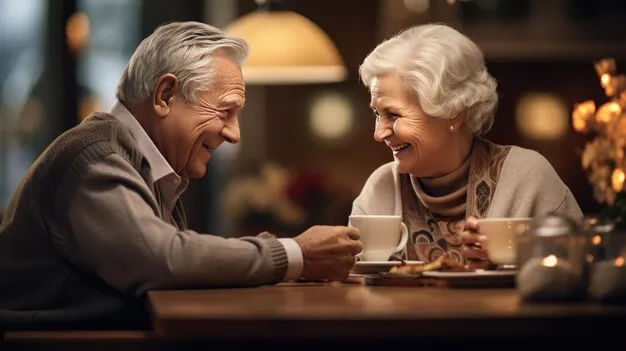
Photo: mature couple reconnecting over coffee looking thoughtful, via img.freepik.com
That name pops up in your inbox and suddenly you're 38 again. Your stomach does something it hasn't done in a while. Maybe it's a Facebook message, a mutual friend's mention at dinner, or a completely random run-in at the airport. Whatever the trigger, the question that follows is the same: Is this worth exploring?
For mature adults navigating life after 50, reconnecting with a past partner carries a specific kind of emotional weight. It's not just dating — it's archaeology. You're digging through layers of shared history, old versions of yourselves, and feelings that never quite got filed away properly. That can be beautiful. It can also be a trap.
So how do you actually tell the difference?
Why Old Flames Feel So Compelling (It's Not Just Nostalgia)
There's real psychology behind that magnetic pull. Researchers call it "the reminiscence bump" — the tendency for memories from our past to feel more vivid and emotionally charged than recent ones. When you think about a former partner, you're not remembering them accurately. You're remembering a highlight reel filtered through decades of selective memory.
Add to that the concept of "familiarity bias" — our brains genuinely prefer known quantities over unknowns. After the exhausting uncertainty of modern dating, someone who already knows your laugh, your family drama, and your coffee order feels like a shortcut. And in a culture where starting over after 50 can feel daunting, that shortcut is incredibly seductive.
None of this means the pull is wrong. It just means you need to be aware of it before you make decisions based on it.
The Question That Actually Matters: What Broke It?
Before you respond to that message, get brutally honest about one thing: Why did it end?
Not the surface-level version. Not "we were young" or "the timing was off." The real version. Because the reason a relationship ended is almost always the single best predictor of whether a reunion will stick.
There's a meaningful difference between relationships that ended due to circumstance — distance, career moves, family pressure, immaturity — and those that ended due to character. Circumstantial endings leave room for a genuine second act. Character-based endings rarely do.
Ask yourself:
- Did the relationship end because of who you both were, or because of where you both were?
- Were there patterns of dishonesty, control, emotional unavailability, or chronic conflict?
- Did you feel consistently unseen, dismissed, or diminished?
If the answer to that last cluster is yes, the most important thing to know is this: people don't change their core relational patterns without significant, intentional work. A person who made you feel small at 35 hasn't automatically become emotionally generous at 58 just because time passed.
Red Flags That Are Still Red, Just Older
Some warning signs are easy to spot when you're young and dramatic. They're sneakier in middle age because they arrive wrapped in maturity and good manners.
Watch for:
The "I've changed" claim without evidence. People who've genuinely done the work to grow don't usually announce it — they demonstrate it. If your ex leads with how much they've changed but can't point to specific ways their behavior or thinking has shifted, that's a flag.
Rushing the emotional intensity. Rekindled relationships can move fast because of that false familiarity. If things feel overwhelming quickly — declarations of love within weeks, pressure to commit, talk of moving in — slow down. Speed is often a sign that someone is chasing the memory of you, not actually getting to know who you are now.
Revisionist history. Pay attention to how they talk about the past. Do they take any accountability for how things fell apart, or is the story entirely about what you did, what circumstances did, what everyone else did? Selective memory about shared history is a serious warning sign.
Unresolved grief or resentment. Sometimes people reach out not because they're ready for a new chapter but because they're still stuck in the old one. If conversations keep circling back to old wounds, they may be looking for resolution — not romance.
A Framework for Making an Intentional Choice
Here's a simple three-part check before you decide how to move forward.
1. Separate the feeling from the fact. Write it out if you need to. List what you actually know about this person — not what you remember, not what you hope — but what you have concrete evidence of. Their behavior toward you. Their behavior toward others. How they handled conflict, disappointment, and your needs.
2. Imagine the mundane version. It's easy to romanticize reunion dinners and rekindled sparks. Harder to picture Tuesday afternoons, disagreements about money, and their reaction when you're sick and not particularly charming. Can you genuinely picture a daily life with this person that works?
3. Ask your most honest friend. Not the one who loves a good love story — the one who remembers what you looked like when things were bad. The one who watched you heal. Give them full permission to be real with you.
When Walking Away Is the Smartest Romantic Move You'll Ever Make
Walking away from something that feels good takes real courage, especially after 50 when the dating pool can feel smaller and loneliness is a genuine factor. But choosing not to rekindle isn't giving up on love — it's protecting your capacity for it.
If your gut is telling you something is off, trust it. You've earned that instinct. Decades of living and loving and getting it wrong have calibrated something in you that younger daters simply don't have yet.
The best version of a second chance isn't about going back — it's about both people showing up as genuinely different, better versions of who they were. If that's what's in front of you, it might be worth every bit of the risk. If it's not, the most loving thing you can do for yourself is close that chapter and leave room for something new.
You're not the same person you were. You deserve someone who's grown too.