Log Off, Light Up: What Really Happens When Mature Singles Quit the Apps for a Month
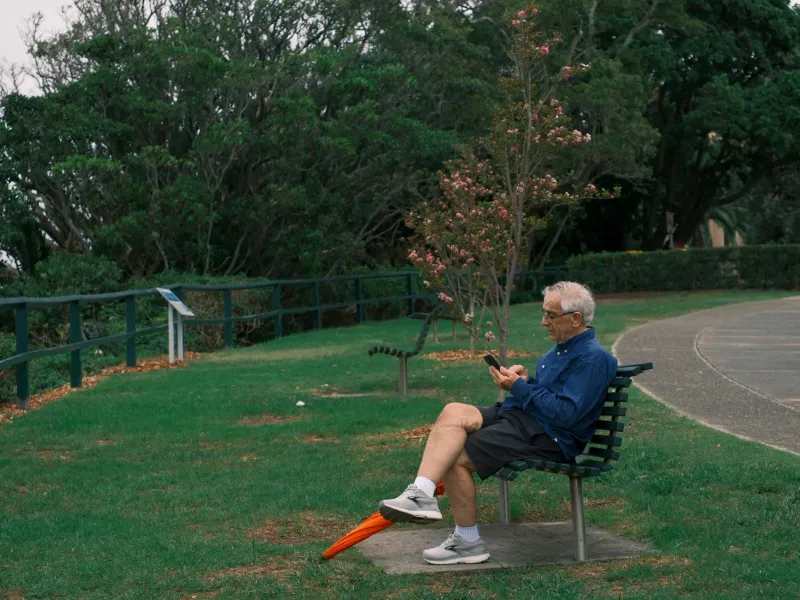
Let's be honest about something. There's a particular kind of exhaustion that comes from online dating — and it's not the same as being tired from a long day at work. It's more like decision fatigue mixed with low-grade disappointment, seasoned with just enough occasional sparks of hope to keep you coming back.
For mature singles especially, the experience can feel weirdly disconnected from what they're actually looking for. You know yourself well enough to recognize a real connection when it's there. But the apps, by design, aren't really built for depth. They're built for volume. And volume, after a while, starts to feel like noise.
More and more people over 50 are trying something counterintuitive: they're walking away. Not permanently — but deliberately, for a fixed stretch of time. And what they're finding on the other side is worth paying attention to.
What Digital Dating Overload Actually Does to You
Before we get into the detox itself, it helps to understand what constant swiping is doing to your brain and your emotional state.
Every time you open a dating app, you're engaging with what behavioral psychologists call a variable reward loop — the same mechanism that makes slot machines so compelling. Sometimes there's a match. Sometimes there's a message. Most of the time there's nothing much. But the possibility keeps you pulling the lever.
Over time, this wears on your ability to genuinely evaluate connection. You start processing potential partners more like a catalog than like people. Small imperfections that wouldn't register in real life become instant disqualifiers when they're presented as a static profile. And the sheer volume of options creates what researchers call the paradox of choice — the counterintuitive finding that more options often lead to less satisfaction, not more.
For mature daters who came of age before smartphones, this can feel especially grating. You remember what it felt like to meet someone organically, to let attraction develop over actual conversation. The app experience, at its worst, feels like a pale imitation of that.
What 30 Days Off Actually Looks Like
A month-long break from dating apps doesn't mean you've given up on finding someone. It means you've decided to stop letting an algorithm manage your love life for a few weeks.
In practice, people describe the first week as the hardest. There's a pull to check the apps — not even because you're expecting anything meaningful, but because it's become a habit. A reflex. Something to do while waiting for coffee or lying in bed before sleep.
By week two, something shifts. The absence of constant low-level stimulation starts to feel less like deprivation and more like quiet. People report sleeping better. Feeling less vaguely anxious. Noticing that they're more present in everyday situations.
And then something interesting starts happening: they begin paying attention to the people already in their lives.
Real Stories From the Other Side of the Pause
Diane, 58, from Austin, deleted her apps after what she describes as a "perfectly fine but completely forgettable" string of first dates over six months. "I realized I was going on dates the way you scroll through Netflix," she says. "Just to feel like I was doing something. None of it was real."
Her 30-day break turned into 45 days. During that time, she reconnected with a friend-of-a-friend she'd met at a dinner party, someone she'd dismissed as "not app material" — meaning she'd never have swiped on him because his photos were unremarkable. They've been together for over a year.
Marco, 62, from Chicago, took his break after realizing he'd been on his dating app for three years without a single relationship that lasted more than two months. "I was optimizing for matches, not for people," he says. "The break forced me to think about what I actually wanted versus what I was trained to swipe on."
He came back to the apps — including Seksia — but with a completely different approach. Fewer swipes, more intentional messages, a willingness to invest time in actual conversation before suggesting a meeting. His third date after returning became a six-month relationship.
The Paradox: Absence Makes the Algorithm Work Better
Here's the part that surprises most people: taking a break often makes you more attractive when you return.
This isn't mystical. It's practical. When you step away and come back with renewed intention, it shows up in how you present yourself. Your profile gets refreshed. Your opening messages become more thoughtful. You're less likely to send the lazy "hey" that everyone ignores because you're actually paying attention to who you're reaching out to.
More importantly, the break gives you space to recalibrate what you're looking for. A lot of mature singles discover during their 30 days off that they'd been pursuing a type that wasn't actually working for them — not because the people were wrong, but because the selection process was optimizing for surface-level appeal rather than genuine compatibility.
Coming back with clearer eyes tends to produce different, better results.
How to Actually Do It (Without Losing Your Mind)
If you're considering a digital dating detox, a few practical notes:
Set a specific end date. "Taking a break" without a defined endpoint tends to drift into passive avoidance. Committing to 30 days gives you a container — something with a beginning, a middle, and a return.
Fill the time with something social. The goal isn't isolation; it's redirection. Take a class. Go to events. Say yes to invitations you'd normally skip. You're not hiding from connection — you're seeking it through different channels.
Journal what comes up. This sounds cheesy, but the absence of digital distraction tends to surface things you've been avoiding thinking about. What do you actually want from a partner? What patterns keep repeating? What would a genuinely good match feel like in real life, not just on a screen?
Don't announce it. You don't need to make a production of your break. Just quietly step away. The people worth finding will still be there when you come back.
The Reset Is the Point
Taking 30 days off from dating apps isn't about giving up. It's about giving yourself enough breathing room to remember why you're looking in the first place — and who you actually are when you're not performing for an algorithm.
Mature singles have something most younger daters don't: a genuine sense of self that exists independently of their relationship status. A month offline is just enough time to reconnect with that. And when you bring that groundedness back to the search, everything tends to go a little differently.