Split, Heal, Come Back Stronger: The Real Reason Reunited Couples Over 50 Win at Love
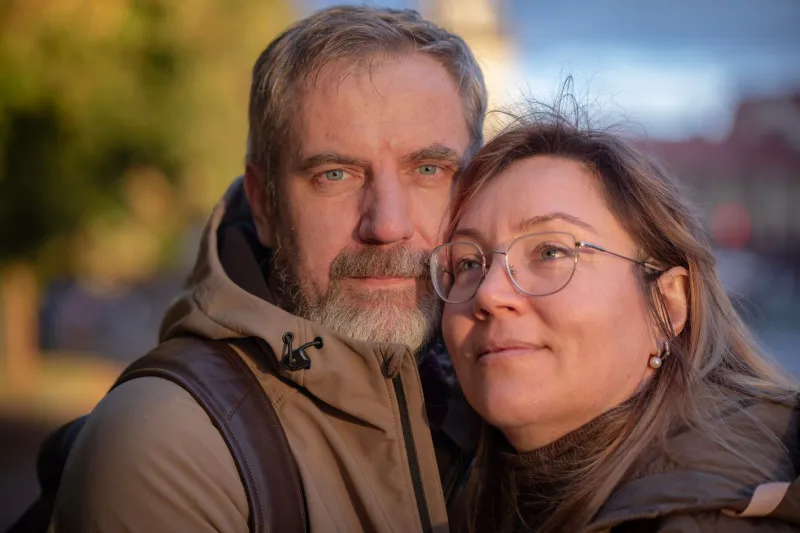
Conventional wisdom says breaking up is failure. Walk away, chalk it up to incompatibility, move on. But somewhere in the messy, beautiful reality of mature dating, a different story keeps emerging — one where the couples who split and circled back are quietly outpacing everyone else in the happiness department.
It sounds counterintuitive. Shouldn't the couples who stuck it out through decades of difficulty have the strongest bonds? Not necessarily. And understanding why changes everything about how we think about second chances after 50.
The Gap Isn't the Problem — It's the Point
When two people in their 50s or 60s reunite after a breakup, they're not picking up where they left off. They're returning as fundamentally different people. The time apart — whether it was six months or six years — forced something that staying together never quite demands: genuine individual reckoning.
You can't blame a partner when they're not there. You can't outsource your unhappiness to the relationship dynamic when the relationship is gone. That solo stretch, however painful, tends to produce a level of self-awareness that couples who never separated rarely develop at the same depth.
Research in relationship psychology consistently shows that self-differentiation — the ability to maintain a strong sense of self within a close relationship — is one of the most reliable predictors of long-term satisfaction. A breakup, brutal as it is, often accelerates exactly that kind of growth.
The Ego Takes a Beating (and That's a Good Thing)
Here's something nobody talks about enough: mature adults who've lived through a breakup and chosen to return tend to arrive with significantly deflated egos. Not crushed — deflated. There's a difference.
The pride that kept you from apologizing, the stubbornness that turned small disagreements into cold wars, the certainty that you were simply right — a lot of that gets worn down by time, reflection, and the humbling experience of dating again in your 50s. If you've spent even a few months back in the dating pool after a long relationship, you know exactly what we mean.
That softening isn't weakness. It's one of the most powerful ingredients in a lasting reconnection. When two people come back to each other with less to prove, the relationship breathes differently. Conversations that once escalated into arguments tend to land more gently. There's less performance, more presence.
Priorities Get Ruthlessly Clarified
At 35, you might stay in a mediocre relationship because you're not sure what you actually want. At 55, that ambiguity is largely gone. You've lived enough life to know what drains you and what fills you up. You know whether you need a partner who travels, or one who stays home. You know if shared finances matter, or if you'd rather keep things separate. You know your dealbreakers because you've watched yourself break deals.
When a mature couple reunites, they're not just bringing renewed affection — they're bringing edited, refined lists of what actually matters. The trivial grievances that once loomed large tend to shrink in the rearview mirror. What remains is a clearer, more honest picture of compatibility.
This clarity is a superpower. Many reunited couples describe the experience as finally seeing each other without the noise — the noise of insecurity, of competing ambitions, of unresolved family pressures. The second time around, they often say, they could actually see their partner.
The Chemistry of Coming Back
There's also something worth acknowledging that's a little harder to quantify: the physical and emotional charge of reuniting with someone you've genuinely missed.
Neurologically, rekindled relationships activate reward pathways in ways that long-settled partnerships sometimes don't. The novelty of reunion combined with the deep familiarity of an existing bond creates a rare cocktail — you're not starting from zero, but you're not operating on autopilot either. That combination tends to produce a quality of attention and desire that both partners notice immediately.
For mature adults especially, this matters. Intimacy after 50 thrives on emotional safety and genuine desire — and a reunion delivers both simultaneously. You're not auditioning for each other. You're choosing each other again, knowingly, with your eyes wide open. That deliberate choice is its own kind of aphrodisiac.
It's Not Nostalgia — It's Evolution
One of the biggest misconceptions about couples who get back together is that they're chasing the past. In reality, the most successful reunions aren't about recreating what was — they're about building something the first attempt never quite managed to become.
The couples who thrive after reconciliation tend to be the ones who refuse to pretend the breakup didn't happen. They talk about it. They name what went wrong the first time. They establish new agreements, new rhythms, new boundaries. They treat the relationship as a sequel, not a rerun.
That willingness to look directly at the failure — without shame, without blame spirals — is itself a sign of the emotional maturity that makes the second attempt stick.
So Should You Go Back?
Not every breakup is a setup for a better reunion. Some relationships ended for reasons that don't change with time — fundamental incompatibilities, patterns of harm, or simply two people who grew in genuinely different directions. There's no romance in forcing a reconnection that was never meant to be.
But if you've found yourself wondering about someone from your past — not out of loneliness or nostalgia, but out of a genuine sense that you're both different now — that instinct deserves some honest attention. The question isn't whether you loved each other before. It's whether the people you've become could build something better.
After 50, the answer is sometimes a surprising yes. And when it is, the relationship that emerges from that second chance tends to be something neither of you could have built the first time around — precisely because you needed the break to become who you had to be to build it.